


Rethinking Thanksgiving
What follows is from the Cornell AgriTech DEI Bulletin. Many thanks to our colleagues Anna Katharine Mansfield and Amara Dunn-Silver, Cornell AgriTech DEI Council co-chairs, who are taking such a strong lead with their DEI efforts.
For many Americans, our first memories of Thanksgiving were school pageants featuring Pilgrims and Indians*, construction paper hand turkeys, and the cheery story of a peaceful feast. As adults, the day is marked with a large meal of favorite family recipes followed by football, a parade, or shopping. A general mood of goodwill and gratefulness prevails, except for those with challenging family dynamics or dish-washing responsibilities.
…Or for North America’s Indigenous peoples.
The feathered headdresses of Thanksgiving pageant Indians mark them as stereotyped characterizations. The actual Native Americans who aided the English immigrants in 1621 were members of the Wampanoag Nation, whose land encompassed much of modern southeastern Massachusetts and eastern Rhode Island. Wampanoag tribal communities continue to inhabit and care for some of their ancestral lands today. Though initial relations may have been peaceful, history shows us that European settlers came in increasing numbers with new diseases and great violence, ultimately forcing native peoples across North America to assimilate or retreat to fragmented tribal lands.
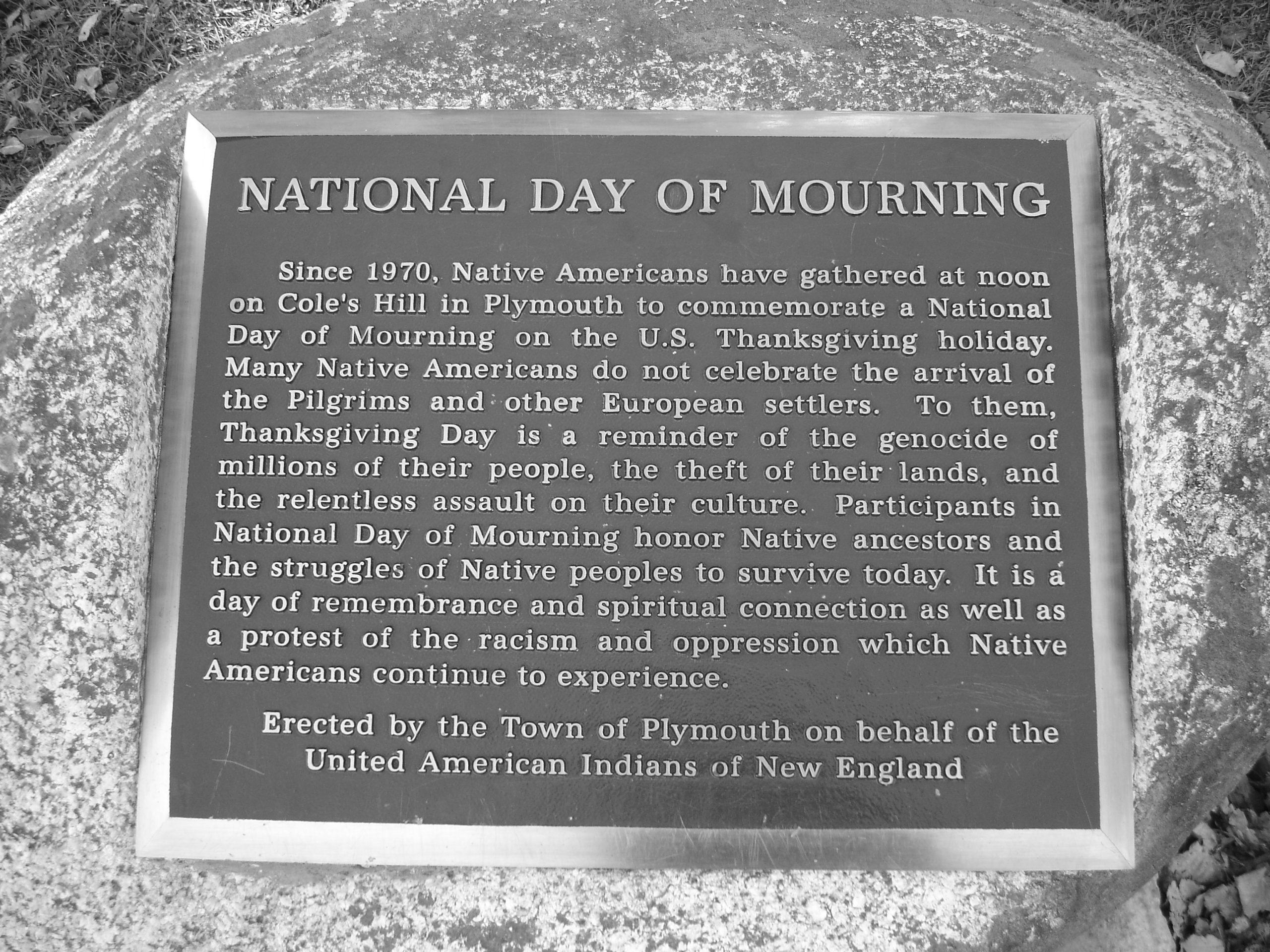
During the rise of Native American activist movements in the late 1960’s, Wampanoag activist Frank James and a small group of like-minded organizers decided that this history of dispossession needed to be shared, and held the first National Day of Mourning in 1970. Their mission was to acknowledge the past and ongoing trauma of Native Americans while enhancing acceptance and cultural appreciation between Natives and non-Natives to improve the future.
There is great value in gathering with family and friends, sharing a meal, and reflecting on the good things in our lives. It is harmful, however, to insist on a national myth that ignores important but unpleasant historic facts. This dichotomy can be profoundly uncomfortable, but it’s empowering to reshape Thanksgiving by honoring family traditions while dismantling false narratives.
*While ‘American Indian’ is still used on U.S. government documents, there is a lot of disagreement over preferred use within the community. Different people may prefer to be identified as ‘Native American’ or ‘Indigenous.’ If you don’t know, it’s ok to ask.
Here are some ways to rethink Thanksgiving:
- Focus on giving thanks. This concept is central to the heritage and culture of many Native peoples. Reflecting on gratitude for the natural world, a successful harvest, and our loved ones is a universal human trait that helps us connect across cultures.
- Disrupt the oversimplified Thanksgiving fairytale. If you haven’t revisited the history of Pilgrim and Wampanoag interactions since elementary school, consider learning more of the complex story — and sharing it in age-appropriate ways with the children in your life.
- Explore Indigenous foodways. Thanksgiving dinners include lots of traditional dishes, and adding some regionally-sourced Native foods can help tie the celebration to the place you call home.
At Cornell AgriTech, we grow things- including appreciation for those who worked the soil before us.
All I can say is all the tryptophan in the turkey not only made me sleepy but must have prevented me from being woke while I was visiting my parents.
Mea culpa! Mea culpa!
0 Comments